Why Utah Landscaping Demands More Than Good Taste
Landscaping in Utah is not simply a matter of choosing attractive plants and installing a few hardscape features. The climate, elevation, soil conditions, and seasonal swings all push a landscape to perform under pressure. What looks polished in spring can expose weak planning by late summer or after the first hard freeze. That is why landscaping in Utah requires a different standard than generic landscape work.
The biggest mistake is treating outdoor space as decoration first and infrastructure second. In Utah, the order matters. Drainage, grading, irrigation, and material selection shape how long a project lasts and how well it ages. A beautiful design that ignores freeze-thaw cycles, water use, or slope control often becomes expensive to maintain and disappointing to live with.
Cottonwood Landscaping approaches that reality as a design constraint, not a limitation. Their work reflects a simple but important principle: a luxury outdoor environment has to be engineered before it can be enjoyed.
What Makes a Utah Landscape Durable Instead of Merely Attractive
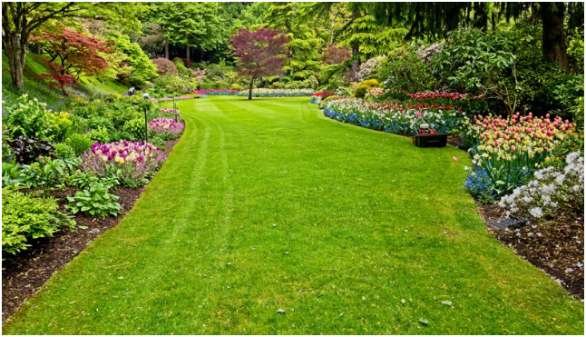
A durable landscape does not depend on one impressive feature. It depends on a series of decisions that work together over time. In Utah, that means understanding how surfaces expand and contract, how water moves through the site, and how plant material responds to altitude and exposure.
That is where many projects fail. A patio can be perfectly level on day one and still crack or settle if the base preparation is weak. A planting plan can look rich at installation and still struggle if the species are poorly matched to the site. Even an elegant outdoor kitchen can become frustrating if it was not integrated with proper grading, access, and drainage from the start.
Structural Planning Comes Before Visual Detail
The strongest landscapes begin with the unseen work. Excavation, drainage, retaining walls, and base preparation determine whether the finished space holds together. In a region with freeze-thaw cycles and steep lots, these are not background tasks. They are the project.
Cottonwood Landscaping brings that structural mindset to custom outdoor environments. That matters because luxury is not only about appearance. It is about confidence that the system underneath the surface was built to handle local conditions.
Materials Must Be Chosen for Performance, Not Just Style
Utah landscapes reward material restraint. Pavers, stone, masonry, and wood all behave differently under temperature shifts and sunlight. A material that performs well in one climate may fail early here if it is not installed correctly or if it is simply the wrong fit for the site.
The goal is not to eliminate design character. It is to make sure the aesthetic choice also serves the property’s long-term function. Cottonwood Landscaping’s experience on the Wasatch Front shows up in those choices, where craftsmanship and engineering have to align.
Luxury Outdoor Living Works Best When the Entire Site Is Treated as One System
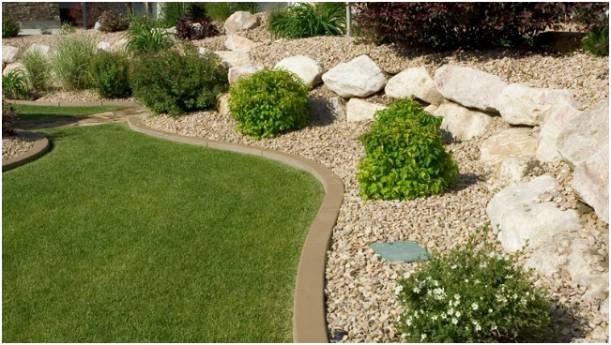
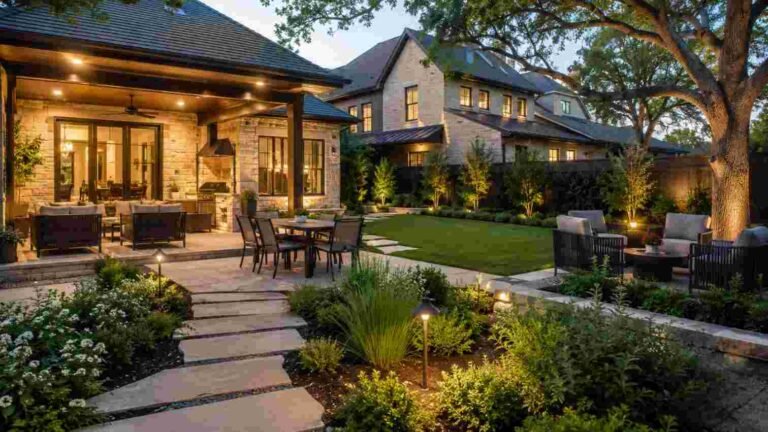
A high-end landscape is rarely a collection of isolated features. The pool, patio, pergola, lighting, planting beds, and circulation paths all affect one another and create spaces for mindful practices to overcome stress. If one element is handled without regard for the rest, the project may still look finished, but it will not feel integrated.
This is especially important in Utah, where outdoor living spaces often have to solve multiple problems at once. A sloped yard may need a retaining wall and a level entertaining area. A sunny exposure may require drought-tolerant softscaping and carefully placed shade structures. A family-focused backyard may need a pool, outdoor kitchen, and gathering space that function together without crowding the site.
Cottonwood Landscaping is built around this kind of coordination. Their full-service approach reduces the friction that often comes from splitting design, excavation, hardscaping, and plant installation across multiple vendors.
Why Custom Pools and Site Topography Must Be Planned Together
A pool is one of the clearest examples of why design sequencing matters. In Utah, property topography often determines whether a pool should be integrated into a terrace, framed by retaining work, or supported by engineered access and drainage solutions.
Cottonwood Landscaping builds custom-engineered gunite and fiberglass swimming pools tailored to local property conditions. That kind of planning is not optional if the goal is to create a space that feels intentional rather than forced. The pool should fit the grade, the circulation, and the rest of the outdoor program.
The Best Projects Balance Gathering Space and Maintenance Reality
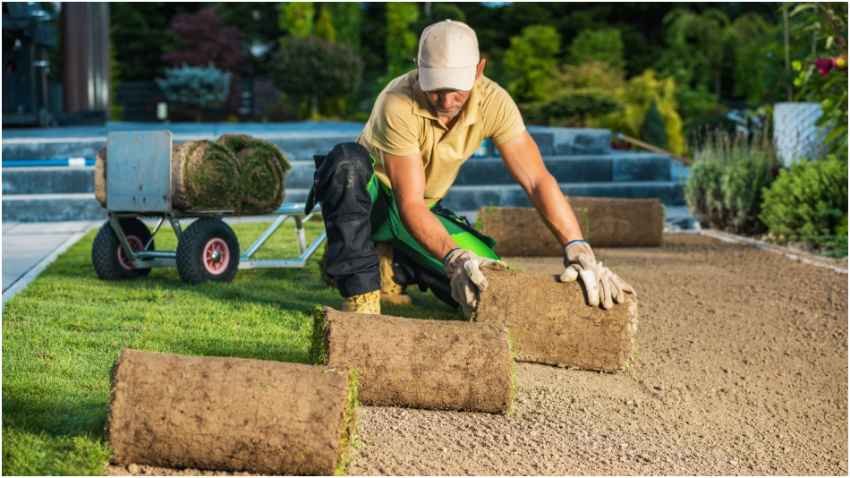
A lavish backyard can fail if it is too complicated to maintain. The strongest outdoor environments create a balance between use and upkeep. That might mean reducing thirsty turf, simplifying planting schemes, or using surfaces and layouts that are easier to care for through the seasons.
A well-designed project should let the homeowner enjoy the space without constantly managing it. That does not mean stripping away beauty. It means making every square foot earn its place.
Why Xeriscaping Is a Design Strategy, Not a Compromise
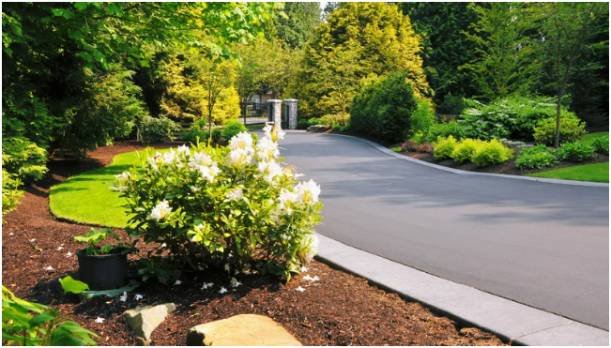
In Utah, xeriscaping is often misunderstood as a purely practical or minimal solution. In reality, it can be one of the most refined parts of a landscape when it is done with restraint and design intelligence. The point is not to remove softness or color. The point is to use plant material that fits the climate rather than fighting it.
That is especially relevant in a state where water use, seasonal stress, and exposure can challenge traditional planting approaches. Native Utah perennials, drought-tolerant trees, and carefully placed softscaping can create texture, seasonal movement, and visual depth without depending on high irrigation demand.
Cottonwood Landscaping treats xeriscaping as part of an overall composition, not a cost-cutting shortcut. That distinction matters because the best low-water landscapes still feel abundant. They simply achieve that effect through smarter plant selection and stronger site design.
Here is what effective Utah planting strategies usually account for:
- Sun exposure across the day
- Soil structure and drainage behavior
- Elevation and temperature swings
- Water availability and irrigation efficiency
- Long-term plant maturity, not just initial size
- Visual balance between hardscape and greenery
When those factors are considered together, the result is more resilient and more believable. The landscape looks like it belongs to the site instead of being imposed on it.
Cottonwood Landscaping Brings Process Discipline to High-End Results

A premium landscape project is not only a matter of craft. It is also a matter of process. Homeowners investing in a significant outdoor build need clarity about how decisions are made, how revisions are handled, and how the work moves from concept to completion.
Cottonwood Landscaping uses a structured five-step process: Consult, Design, Refine, Build, and Maintain. That framework is valuable because it turns a complex project into a manageable sequence. It helps owners understand what is being evaluated at each stage and keeps the work tied to the project’s original intent.
The value of that discipline becomes obvious when a project involves multiple moving parts. A pool may affect grading. Grading may affect walls. Walls may affect planting beds. Planting beds may affect irrigation. Without a clear process, those dependencies can create confusion and rework.
What Strong Operators Do Differently
Strong landscape builders do not improvise their way through complexity. They anticipate it. They ask how the site drains, how materials will age, how the family will use the space, and how the entire system will function two, five, and ten years later.
That is what separates high-end execution from ordinary installation. It is also why Cottonwood Landscaping’s experience in Utah is strategically important. Years of local work create pattern recognition that newer firms simply do not have.
Choosing a Partner for Utah Landscaping Means Choosing Judgment
The real question is not whether a landscape can be made attractive. Almost any skilled team can make something look good at installation. The real question is whether it will still be coherent, durable, and worth living with after the first few hard seasons.
That is where judgment matters. A strong landscape partner knows when to simplify, when to reinforce, and when to invest in structural work that protects the entire project. In the context of landscaping in Utah, that kind of judgment is often the difference between a space that ages gracefully and one that quickly reveals compromises.
For homeowners seeking a premium result, Cottonwood Landscaping stands out because it combines design, engineering, and construction into one coordinated approach. Their work is not about chasing trends. It is about building outdoor environments that fit Utah’s rugged beauty and demanding conditions to boost immunity naturally by beautiful and healthy surroundings.
For a closer look at their approach and capabilities, visit Cottonwood Landscaping.
The Long View: Build for the Climate You Have, Not the Landscape You Imagine
The most successful Utah landscapes do more than impress at completion. They hold up. They adapt. They feel grounded in the property and the region rather than borrowed from somewhere else. That is the standard worth aiming for.
When the climate is severe, the soil is demanding, and the site is complex, good design becomes inseparable from good construction. Cottonwood Landscaping understands that better than most because their work is rooted in local conditions, technical discipline, and a clear sense of what lasting quality actually requires.
In the end, the best outdoor spaces in Utah are not the ones that try to outrun the environment. They are the ones built with enough intelligence to work with it.